What Happens to the Trees and Stumps? Horizontal Grinding, Explained
Home › Blog › What Happens to the Trees and Stumps? Horizontal Grinding, Explained
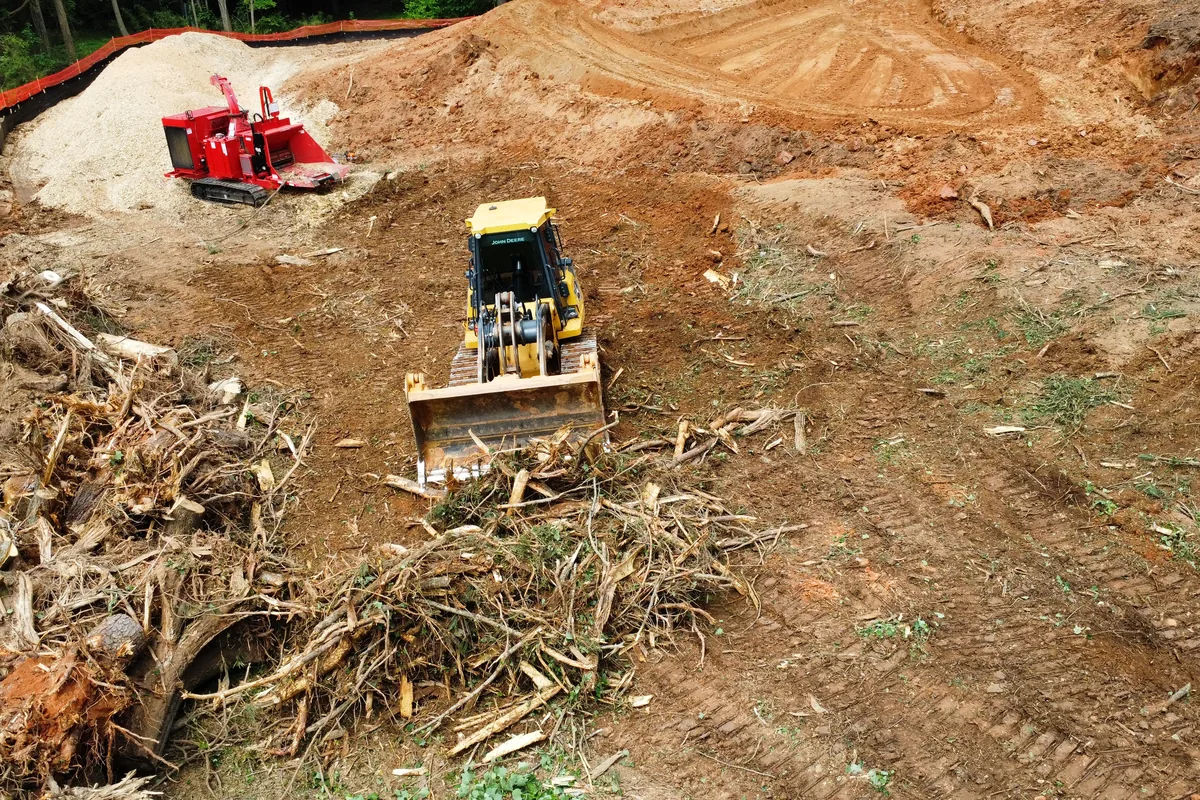
Every clearing job produces a pile: trees, tops, brush, stumps. What happens to it affects the price, the schedule, and what the lot looks like when you're done.
The pile nobody thinks about
When people picture land clearing, they picture the trees coming down. What they don't picture is what's left after: a mound of trunks, limbs, root balls, and brush that can be a surprising share of the whole job. On a wooded lot, the debris can take more effort to deal with than the clearing itself.
There are three ways to handle it, and the one your contractor uses shapes the cost and the finish.
Option one: burn it
Burning is the old way. Pile it up, get a burn permit if your county requires one, wait for a day with the right weather, and keep someone on it until it's done. It's cheap in equipment terms, but it's slow, it depends on conditions you don't control, and it leaves a burn scar on the lot that has to be dealt with before grading. In a neighborhood, it's often not practical at all. Smoke, neighbors, and local rules all get in the way.
Option two: haul it
Hauling means loading the debris onto trucks and taking it somewhere that accepts it. It works, but every load is a truck through your neighborhood, fuel, time, and a tipping fee at the far end. Raw, unprocessed debris is bulky, so it takes a lot of loads to move a modest pile. On a tight infill lot, hauling can end up being the most expensive line on the job.
Option three: grind it on site
A horizontal grinder is a large machine, fed by an excavator, that takes stumps, trunks, tops, and brush and turns them into mulch. It runs on the site, on the contractor's schedule, and doesn't care about the weather. The pile that would have needed a burn day or a dozen truckloads becomes a mound of chips.
What happens to the chips depends on the job. They can be spread on the site, used for erosion control, left in a pile for the owner, or hauled off, and hauling processed mulch takes far fewer loads than hauling raw debris. The lot ends up clean, with no scorched ground and no rutted haul road through the yard.
Why we run a grinder
S5 Earthworks uses a horizontal grinder on our own clearing and homesite jobs because it makes the whole project better. The stumps get dug and ground along with the rest of the debris, so the lot moves straight to grading without a separate stump-removal step. Builders get a cleaner site. Homeowners get no smoke and no burn scar. And the total cost of the clearing phase is usually lower than it would be with hauling.
We also bring the grinder to sites where the clearing is already done and the debris is sitting in piles. Developers and other contractors call us for that regularly. A stacked, accessible pile is a straightforward grinding job.
What it means for your project
When you're comparing clearing quotes, ask what happens to the debris. A price that assumes burning may not be realistic on your lot or in your county. A price that assumes hauling may have a lot of truckloads hiding in it. A price that includes on-site grinding tells you the contractor has thought about the whole job, not just the part where the trees come down.
Read more about our horizontal grinding and land clearing services, or call and tell us what's on the ground. We'll come look at it and give you a straight price.
Have a piece of property that needs work?
Call (678) 846-3195 or send the estimate form. We'll set up a time to walk it with you and give you a straight price.
Get a Free Estimate